.jpg)
Top Benefits of Installing a Fingerprint Door Lock for HDB and Condo Owners

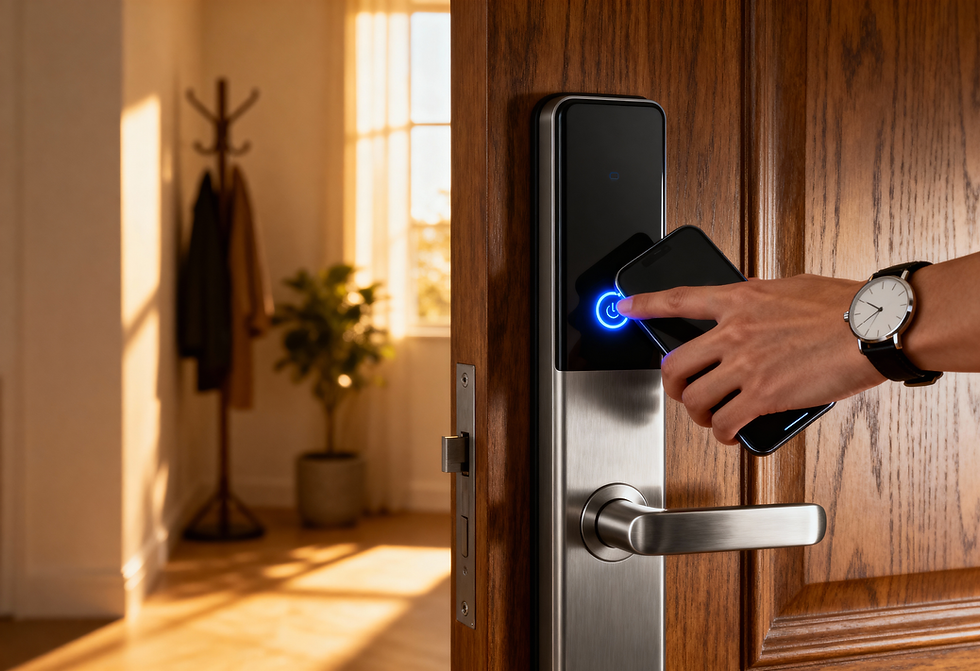
A fingerprint door lock is a biometric device that uses fingerprint recognition to gain access, without the need for physical keys or PINs. Fingerprint door locks are a kind of biometric device that grant access by identifying individual fingerprints, thus taking out the need for traditional keys or PIN numbers. Homeowners will enjoy greater security, added convenience, keyless entry for family members, tamper alerts and audit trail capabilities — a practical upgrade for today’s residential living.
If you live in a HDB flat or private condo in Singapore, your front door is not simply a point of entry — it is your first line of defence. One of the most practical security decisions you can make today is to upgrade to a fingerprint door lock. And once you understand what this technology really does for your everyday life, it is very difficult to go back to a traditional key.
What Is the Difference Between a Fingerprint Door Lock and a Regular Lock?
Classic door locks are based on keys but they can be lost, stolen or duplicated. Instead, a fingerprint door lock uses something much harder to duplicate : your biometric identity. Your fingerprint is unique and cannot be duplicated like a key.
Current fingerprint locks use capacitive or optical sensors that can read the unique ridge pattern of your fingerprint in under a second. Most high-quality models also come with backup access methods such as PIN codes, RFID cards or mobile app connectivity, so you have multiple access options without compromising security.
Important Benefits to Consider When Installing a Fingerprint Door Lock
1. More secure than conventional key locks
Traditional lock systems are vulnerable to lock picking and key duplication. Fingerprint authentication eliminates both of these threats. There is no physical key to copy, no lock cylinder to pick.
Most fingerprint door locks have built-in anti-tamper alarms, which will sound if someone tries to force the device or enters the wrong information multiple times. Some models keep a log of every attempt to access the lock, giving you a complete record of every entry into your home and the time of entry, something that regular locks just can’t do.
2. Total Convenience - No Keys Necessary
For busy HDB and condo residents, fumbling for keys while carrying groceries or managing young children is a small, daily frustration. This is solved immediately by a fingerprint entry. Touch the sensor and you’re in. Hands-free. Effortlessly. Every time.
Other members of the household are also offered this convenience. Rather than cutting a bunch of keys and trying to remember who has what copy, each family member is assigned their own registered fingerprint. No key management. [NO KEY MANAGEMENT] No risk of a family member being locked out because they left their key at work.
3. Easy Access Control for Multiple Users
Most home fingerprint door locks in Singapore allow you to register between 10 and 100 prints, depending on the model. They are perfect for property owners wishing to control access to their property for cleaners, contractors or carers and for households with more than one resident.
Add or delete fingerprint access whenever you want without changing your locks. If your domestic helper leaves employment, you simply remove their fingerprint – no locksmith needed. That flexibility is a great practical benefit for condo owners who often have service people coming into their homes.
4. Keyless Entry Lowers Lockout Risks
Lockouts are more common than most would like to admit. In Singapore, emergency locksmith services can range between SGD 80 and SGD 300 or more, depending on the time and difficulty of the lock. This scenario is near impossible with fingerprint door lock as your main access method.
Even if the biometric sensor fails, a well-designed lock offers fallback options, such as a PIN code, physical override key, or smartphone access. You are never truly stranded away from your own house.
5. Operation Child & Elderly Friendly
Kids lose keys all the time. Small, fiddly keys and forgotten PIN combinations can be difficult for elderly residents. A fingerprint lock neatly covers both of them. Entry is simple and dependable for kids old enough to have registered fingerprints. Touch-based entry eases the mental load of memorising codes or shuttling between keys for the elderly family members.
This is even more so in multi-generational HDB households where the residents may have vastly different levels of physical dexterity and memory reliability.
6. Audit Trail & Remote Tracking Features
High-end fingerprint door locks with smart home connectivity offer real-time access logs. Get push notifications for any accesses or failed attempts from your smartphone and check exactly when your door was opened, by which fingerprint.
“This visibility is essential to condo owners who travel often or rent out their units,” he said. And you can maintain control over your property when you’re not there in ways no traditional lock ever could.
7. Meets HDB and Condo Door Standards
A common question that many Singapore homeowners have is if a fingerprint lock can fit into their existing door frame. Most residential fingerprint door locks in Singapore are built to fit the standard door specifications that are HDB and BCA-compliant. They are typically a direct replacement for the existing lock body and lever set with no changes to the structure of the door itself.
Always check the model compatibility with your door type – whether it is a timber HDB door or metal gate or solid-core condo entrance door – before you buy.
Fingerprint Door Lock vs. Traditional Lock: A Quick Comparison
Feature | Fingerprint Door Lock | Traditional Key Lock
|
Key duplication risk | None | High |
Lockout risk | Very low | Common |
Multi-user access | Yes, easily managed | Requires multiple physical keys |
Access log / audit trail | Yes (smart models) | No |
Tamper alert | Yes | No |
Ease of use (elderly/children) | High | Moderate to Low |
Installation complexity | Moderate (professional recommended) | Low |
Fingerprint Door Lock Singapore: What To Look For
All finger print locks are not the same. When considering options, the following may be useful:
Sensor quality: Budget models usually use optical sensors, but capacitive sensors are more accurate and work even with dry or slightly worn fingertips.
Battery life: Most fingerprint door locks are powered by AA batteries. Look for models with a low-battery warning and an external emergency power port.
Backup access methods: 1. Ensure the lock has a minimum of one backup entry method (pin, card or physical key) for emergencies.
Water & dust resistance: If your door is exposed to humidity or an outdoor corridor, which is common in HDB corridors and landed property entrances, look for an IP rating.
Smart connectivity: Locks with Bluetooth or Wi-Fi can be controlled remotely, with access logs available through a smartphone app — a handy perk for those who travel frequently or rent out their property.
Are Fingerprint Door Locks Worth The Investment?
The answer for HDB and condo owners in Singapore is a simple yes. The cost for entry-level fingerprint door locks starts from about SGD 200 to SGD 400 and premium smart models can cost even more. The return on investment is clear when you consider the cost of one locksmith emergency call, the persistent hassle of managing physical keys, and the actual improvement in home security.
There's also a lifestyle quality argument, beyond the numbers. Features like keyless entry, access control transparency and tamper protection become part of your everyday routine in no time — and residents who make the switch rarely want to go back to a traditional lock.
If you are considering an upgrade, Lockin offers a range of home fingerprint door locks that is perfect for both HDB and condo door settings in Singapore. They also come with professional installation support so that your lock will be reliable right from the start.
Frequently Asked Questions
Can a fingerprint door lock be installed on an HDB door in Singapore?
Yes. Most fingerprint door locks available in Singapore are designed to fit standard HDB door frames and comply with BCA specifications. They typically replace the existing lock body and lever set without requiring structural changes. It is recommended to confirm the specific model's compatibility with your door type before purchasing or proceeding with installation.
What happens if the fingerprint sensor fails to read my print?
Quality fingerprint door locks include multiple backup access methods such as a PIN keypad, RFID access card, or a physical override key. In most cases, sensor failure is rare but temporary — caused by wet or dirty fingers. Cleaning the sensor and fingertip usually resolves the issue immediately. Always register backup users and access methods during initial setup.
How many fingerprints can a fingerprint door lock store?
Storage capacity varies by model. Entry-level residential fingerprint door locks typically store between 10 to 30 unique fingerprints. Higher-end models can accommodate up to 100 or more. For most HDB and condo households, a standard model with 20 to 50 fingerprint slots is more than sufficient for all family members and occasional registered visitors.


Comments